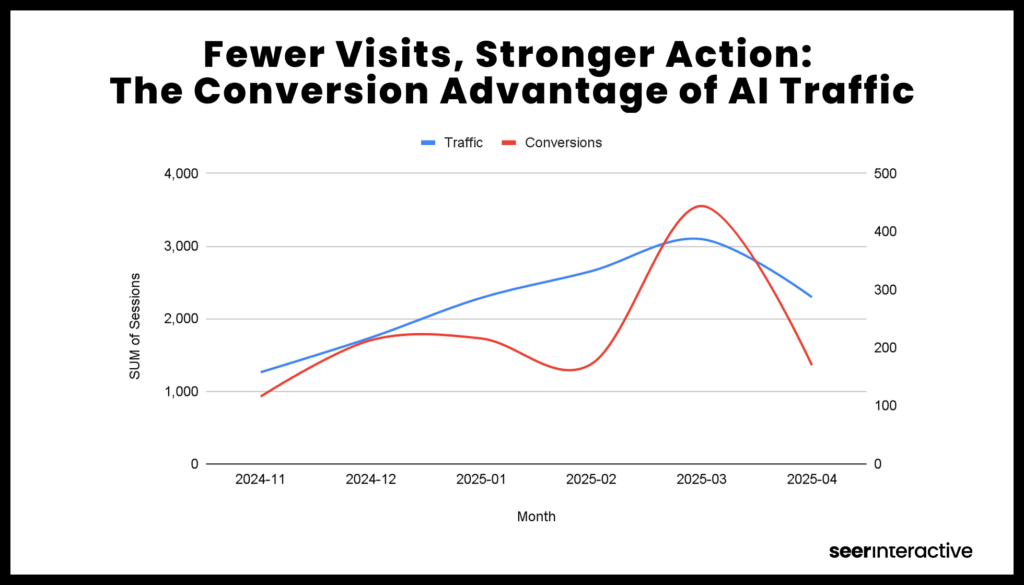
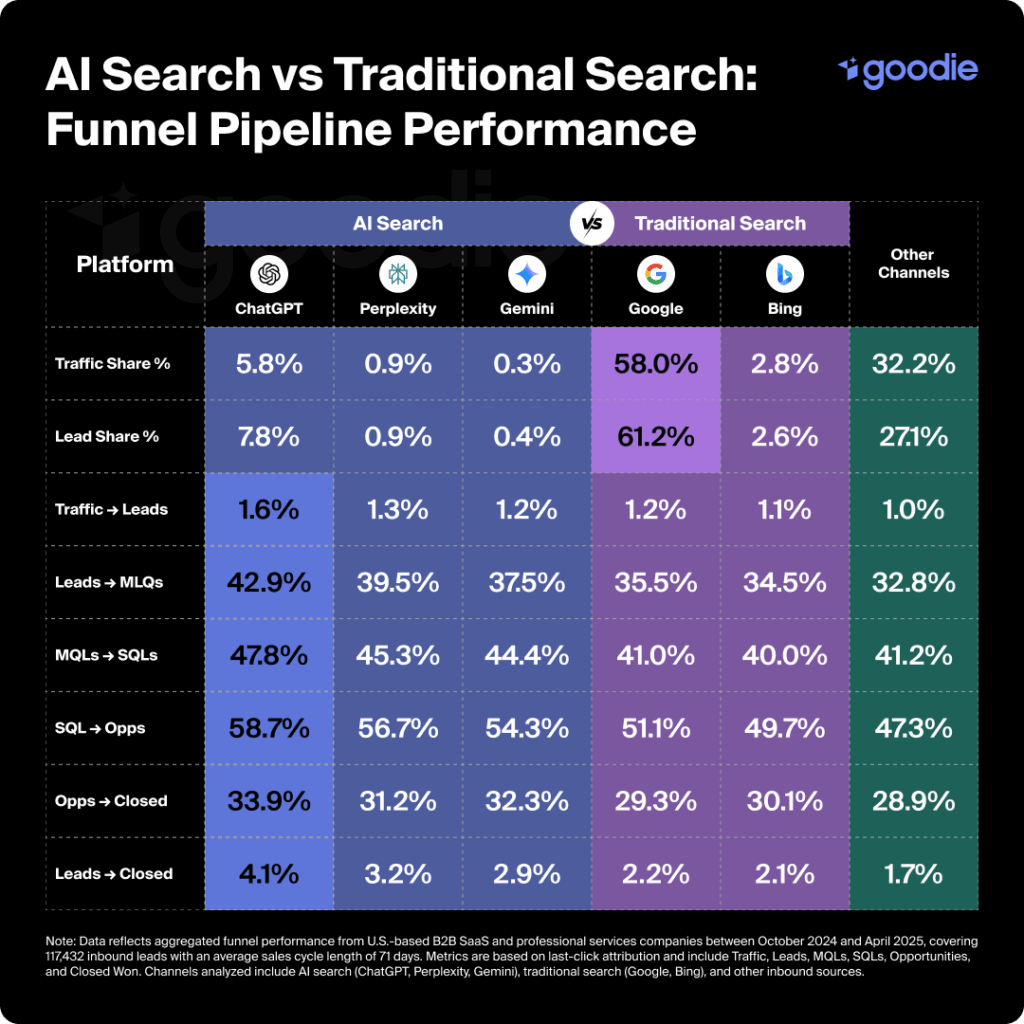
London's best GEO agencies combine entity optimisation, structured data, and LLM-ready content to get brands cited in ChatGPT, Google AI Overviews, and Gemini. The commercial opportunity is significant: brands appearing in generative responses earn trust and visibility at the earliest stages of the customer journey.
As ai search becomes a primary discovery channel for B2B buyers, the agencies that understand how to optimise for generative platforms, not just traditional blue links, are pulling ahead. London has become the natural home for that specialisation.
Key takeaways
- GEO requires structured data, entity clarity, and LLM-ready content that traditional SEO doesn't address
- The best GEO agencies track ai visibility across ChatGPT, Gemini, and Perplexity, not just Google Search Console
- B2B SaaS firms with long sales cycles need specialists who map content to multi-stakeholder buyer journeys
- London GEO retainers typically run £3,000 to £25,000 per month depending on scope and complexity
- Integrating GEO with traditional SEO gives brands coverage across both blue links and AI generated answers
At FirstMotion, we've spent years helping established B2B software and SaaS companies win visibility across both traditional and generative search. Our proprietary ContextualJourney™ platform maps real AI search behaviour to buyer-journey gaps your competitors haven't spotted yet.
This guide covers the 10 best generative engine optimisation agencies in London for 2026, what makes each one distinctive, and how to choose the right fit for your business.
What is a GEO agency and why does London matter in 2026?
Generative engine optimisation is the practice of making your content citation-worthy for AI systems: ChatGPT, Google Gemini, Google AI Overviews, Microsoft Copilot, and Perplexity. It's a fundamentally different discipline from traditional SEO, which focuses on ranking signals and backlinks rather than how large language models select and synthesise information.
GEO requires a different approach to traditional SEO, demanding structured data, entity clarity, and authoritative content at every layer of your site.
It also demands a sharper understanding of content optimisation: how individual pages are structured, cited, and parsed by AI models before they ever surface in a response.
Leading London agencies have developed unique metrics to track ai visibility inside LLMs, which traditional tools can't measure. That measurement gap is one reason specialist GEO agencies are increasingly sought over generalist digital marketing shops.
The best GEO agencies optimise for entire ecosystems, ensuring brands show up in AI generated answers, summaries, and sources of authority. When selecting a GEO agency, look for transparency and realistic expectations regarding the evolving nature of ai search.
GEO services in the UK typically start from around £1,500 to £3,000 per month for SMEs, with enterprise level projects costing significantly more. Full-stack GEO and technical SEO services for growing businesses typically sit between £1,500 and £8,000 per month. London's talent pool, GDPR expertise, and density of AI startups make it the natural home for GEO specialisation in 2026.
The role of digital PR in generative engine optimisation
Digital PR has become a cornerstone of effective GEO strategy and one of the most underused levers in ai search visibility. In the context of generative engine optimisation, it goes well beyond traditional link building: it's about amplifying your brand's presence to influence both human audiences and AI systems simultaneously.
A robust digital PR campaign increases brand mentions in authoritative publications and news outlets. Those brand mentions and backlinks act as signals that AI systems use to assess authority and relevance, directly impacting your visibility in AI generated answers and AI Overviews.
Digital PR shapes AI search behaviour by ensuring your brand is consistently referenced in contexts that matter to your audience.
It feeds the authority signals that ai platforms like ChatGPT, Gemini, and Perplexity rely on when deciding which sources to cite.
Content strategies that combine digital PR with technical GEO work consistently outperform approaches that treat them as separate workstreams. The brands that invest in both simultaneously build compounding authority that neither tactic achieves alone.
10 best GEO agencies in London for 2026
The following agencies were selected based on demonstrable GEO practice between 2024 and 2026, London headquarters or a major London office, and a strong track record in AI influenced search environments. No agencies paid to appear.
1. FirstMotion (specialist B2B SaaS GEO agency, London)
FirstMotion is a London-based AI-enabled consultancy built specifically for established B2B software and SaaS firms, specialising in SEO and ai seo optimisation. It offers a proprietary technology platform called ContextualJourney™ for audience intelligence and buyer-journey mapping, helping clients optimise visibility, leads, and pipeline through both traditional SEO and AI native search including GEO and answer engine optimisation.
The consultancy targets visibility across Google AI Overviews, Gemini, ChatGPT, Perplexity, and enterprise assistants shaping B2B buyer journeys. Entity and schema audits have driven significant pipeline improvements for clients in cybersecurity and DevOps.
Measurement is always tied to leads, opportunities, and ACV, not impressions or vanity rankings.
Ideal clients: B2B software or SaaS companies with multi-region presence, long sales cycles of 6 to 12 months, and deal sizes exceeding £50k ARR. Also investors needing digital due diligence on ai visibility inside generative engines.
2. Passion Digital
Passion Digital is a London-headquartered agency, a Google Premier Partner three years running (2023–2025) and a Drum Recommended Agency. Now backed by US AI tech firm Pixis.ai, they bring intelligent forecasting, real-time optimisation, and automated content workflows to AI search visibility.
Content strategies span paid media, organic search, and generative AI for brands wanting all channels aligned. GEO services are priced between £3,000 and £10,000 per month.
Ideal clients: Brands wanting integrated campaigns with paid media synergy alongside ai search visibility.
3. Found
Found operates with a proprietary Everysearch™ methodology and Luminr platform for tracking search visibility across both traditional search engines and generative ai platforms. Recognised by The Drum and Google as a top partner, it focuses on understanding how large language models surface brands across Google AI Overviews, Bing Copilot, and Gemini, with case studies demonstrating significant visibility uplifts for retail and B2B sectors.
Content optimisation work is particularly strong for brands with large libraries needing restructuring for AI parsability.
Ideal clients: Larger brands across retail, travel, and B2B seeking mature processes and comprehensive AI search monitoring.
4. Bird Marketing
Bird Marketing is a multi-award-winning agency with a London office, recognised across Clutch, GoodFirms, and major digital marketing industry awards. It combines technical SEO foundations with generative-ready content and AI analytics, specialising in regulated sectors including fintech.
Bird Marketing's approach to digital marketing integrates AI search visibility from the outset rather than bolting it on. GEO services are priced between £2,500 and £9,000 per month, with enterprise level GEO strategies and industry-specific approaches.
Ideal clients: London companies with multi-market ambitions across time zones and jurisdictions.
5. SUSO Digital
SUSO Digital is a technically focused London SEO agency that's extended its expertise into GEO, with particular emphasis on structured data and LLM-friendly site architecture. It's known for deep technical audits, schema implementation, and improving how ai platforms parse and cite content.
Their content optimisation process systematically identifies which pages are already close to citation-worthy and prioritises those for structured data improvements first. Published results include +594% AI traffic and +321% AI conversions for a global healthcare brand over 10 months, and 862 AI Overview citations for Skyscanner. GEO services range from £2,000 to £7,000 per month.
Ideal clients: Brands with large SaaS documentation hubs or extensive ecommerce catalogues needing technical cleanup first.
6. Buried
Buried is a UK agency with a strong London presence, founded by growth marketers to integrate AI driven search with performance-focused SEO.
Founded by award-winning growth marketer Will Tombs, it specifically treats GEO as a core specialisation for long-term ai visibility in mid-market brands.
Its GEO work is tightly tied to revenue outcomes: pipeline and digital marketing efficiency come first. Content strategies are built around ROI from day one, not vanity metrics or platform mentions that don't convert.
Ideal clients: Scale-ups wanting aggressive, ROI-led organic growth across both traditional SERPs and generative search results.
7. Exposure Ninja
Exposure Ninja is a well-established UK agency with London reach, known for a structured 9-pillar methodology that now incorporates GEO and AI influenced search. It blends AI-optimised content, semantic keyword architectures, and comprehensive schema, pairing GEO with digital PR and review generation to build authority signals.
Exposure Ninja's content optimisation frameworks are particularly well-documented, making them a good fit for businesses that want to build internal capability alongside outsourced delivery. Integrated SEO and GEO services range from £2,000 to £8,000 per month.
Ideal clients: Businesses wanting process-driven programmes with clear internal education components alongside content and technical delivery.
8. Blue Array
Blue Array operates as a hybrid SEO consultancy with strong London roots, known for embedding specialists within client teams as strategic advisors. Founder Simon Schnieders won Best Large SEO Agency at the UK Search Awards. Its GEO work focuses on strengthening technical foundations and entity clarity for reliable ai platforms citations.
Engagement formats include audits, training, and ongoing strategic governance, a model well-suited to organisations where digital marketing decisions are made in-house but need senior GEO direction. It's a strong fit for PE-backed SaaS portfolio companies needing senior direction rather than full outsourcing.
Ideal clients: Organisations with in-house teams needing leadership and enablement rather than execution-only GEO services.
9. Varn
Varn is a search agency with strong technical pedigree and London presence, focusing on information architecture and structured content for AI models. Its GEO services centre on entity modelling, schema markup, and content optimisation for AI clarity.
Leading London agencies like Varn that specialise in entity modelling and schema markup facilitate AI understanding and citation in ways generic digital marketing agencies can't replicate.
Ideal clients: Companies in regulated sectors including healthcare, finance, and professional services wanting compliance-focused GEO work.
10. Charle
Charle is a London-based ecommerce and Shopify-focused agency that's added GEO and answer engine optimisation services for product discovery in AI powered search environments. It optimises entity clarity for brands with product-level structured data, ranking highly in 2026 ecommerce GEO tables for revenue-tied outcomes.
Charle integrates technical audits, CRO thinking, and content optimisation to align GEO outcomes with customer lifetime value. Their content strategies are built specifically for DTC brands where product discoverability in ai search directly affects revenue.
Ideal clients: DTC, retail, and Shopify Plus brands wanting ai visibility in product research flows.
Understanding AI Overviews, ai platforms and their impact on generative search
Google AI Overview features are fundamentally reshaping how users interact with search results. Unlike traditional search, where users sift through blue links on search engine results pages, AI Overviews deliver concise, synthesised answers directly within the search interface.
For brands, this shift means ranking well in traditional SEO is no longer enough on its own. Ai platforms now prioritise content that's optimised for generative search: structured data, entity clarity, and authoritative information that can be easily cited in AI generated answers.
Agencies ensuring brands are cited and discovered by ai platforms such as ChatGPT and Google Gemini have to work across content quality, technical infrastructure, and earned authority simultaneously.
That's a fundamentally different brief from traditional digital marketing or organic search work.
Comprehensive AI search monitoring lets you track where and how your brand appears across various AI powered search environments. Ai visibility data is now a distinct reporting category from Google Search Console data, and the two measure fundamentally different things.
Brands that adapt quickly by working with the right GEO agency and committing to entity-led content strategies will be best placed to capture attention across both traditional and AI powered search results.
How GEO agencies work with AI powered search and ai seo in 2026
As of 2026, the ai search ecosystem spans Google AI Overviews, Gemini, ChatGPT, Copilot, and Perplexity, all drawing from structured and unstructured web data to produce AI generated responses. Typical GEO workflows follow a clear sequence of phases:
- Audit: Entity gap analysis, schema review, and content parsability assessment
- Content reframing: Restructuring into Q&A formats, adding quotations and statistics for citation-worthiness
- Evidence enrichment: Adding authoritative sources, expert quotes, and data points that LLMs favour
- Monitoring: Tracking brand mentions in ChatGPT, Gemini answers, and AI Overview appearances
- Training data attention: Canonicalisation, freshness signals, ensuring content enters RAG indices appropriately
For B2B SaaS brands, GEO focuses on long-cycle queries like "best SOC 2 compliance software for mid-market fintechs" or "top DevOps platforms with GDPR features." These are complex, multi-intent queries where AI models synthesise multiple sources into a recommendation.
Training data optimisation ensures your content is fresh, canonical, and structured correctly before it enters a model's knowledge base. Agencies also focus on content optimisation for voice-based and conversational queries to secure answer-ready content positions.
Content structured around the way people speak to ai platforms consistently outperforms traditional keyword-led content. That's a core principle of ai seo that generalist agencies often miss.
Effective lsi keyword research for conversational and generative queries is another area where specialist agencies outperform generalists. Search recognition strategies that account for how ai crawlers index and prioritise content are now a core part of any serious GEO programme.
How to choose the right GEO agency: content strategies, content optimisation and digital marketing
The right GEO agency depends entirely on your business model, company stage, tech stack, and internal capabilities. For B2B software and SaaS companies, prioritise agencies with proven long-form content strategies, an understanding of complex buying committees, and a clear methodology for mapping content to multi-stakeholder journeys.
- GEO and SEO integration: How do you balance organic traffic growth with ai search visibility?
- Entity and schema: Can you show an entity audit from a similar client?
- AI monitoring: Which ai platforms do you track? What dashboards do you use?
- Revenue measurement: How do you connect GEO work to pipeline, ACV, or CAC payback?
- Category experience: Have you worked with companies in our specific vertical before?
Before engaging any agency, run a GEO readiness audit and verify they understand keyword research for conversational generative search queries, not just traditional search. Check whether they've tracked ai visibility in Gemini or ChatGPT for previous clients, and ask about their content optimisation approach for generative platforms specifically.
If you're operating in B2B software or tech with long buyer journeys, consider speaking with FirstMotion about a platform agnostic GEO strategy tailored to your category.
Why FirstMotion is a strong choice for B2B SaaS GEO and ai visibility in London
FirstMotion is purpose-built for established B2B software and SaaS companies that rely on organic search and AI driven discovery for demand generation and pipeline growth. It's not a generalist digital marketing agency that's added "ai seo" to its service list: it's a specialist consultancy built for complex B2B buying and competitive search environments.
The ContextualJourney™ platform maps real ai search behaviour by mining prompts from ChatGPT, Perplexity, and Gemini to identify content gaps competitors haven't noticed. Content strategies are tied to specific stakeholders (CFO, CISO, Head of RevOps, engineers) across months-long research cycles.
Measurement is always connected to leads, opportunities, and ACV. Ai visibility reporting covers all major generative platforms, not just Google.
FirstMotion also supports investors with digital due diligence for PE firms assessing how visible portfolio targets are inside generative engines. That capability is increasingly relevant as ai platforms reshape how buyers discover and evaluate software.
Ready to build your GEO game plan?
If your B2B software or SaaS brand isn't showing up in AI generated answers, you're losing ai visibility at the exact moment prospects are forming shortlists. FirstMotion's GEO audit and strategy workshop identifies where you're being missed and what it'll take to close the gap.
Request a GEO audit or strategy workshop with FirstMotion to assess your current ai search visibility and build a clear roadmap for 2026 and beyond.
Frequently Asked Questions
How much do GEO services cost in London in 2026?
GEO services in the UK typically start from around £1,500 to £3,000 per month for SMEs, with enterprise level projects costing significantly more depending on scope and complexity. For mid-market B2B SaaS brands with content production and AI monitoring, retainers typically sit between £6,000 and £12,000 per month.
Enterprise or multi-country programmes range from £10,000 to £25,000 or more per month. Project-based GEO audits start around £8,000 to £20,000 depending on site complexity.
How long before I see GEO impact in AI search results?
Brands with existing authority typically see initial signals within 8 to 16 weeks, particularly in AI Overviews and ChatGPT-style answers. Competitive B2B categories generally require 6 to 12 months for meaningful coverage in AI driven search results, with full programme maturity taking 12 to 18 months.
The biggest early wins almost always come from fixing entity clarity and structured data first.
Ai platforms update their underlying indices on different cadences than Google Search Console, so changes are less immediately visible.
Do B2B SaaS companies really need a specialist GEO agency?
For established B2B SaaS firms with long research phases of 3 to 12 months and complex deal sizes above £50k ARR, specialist GEO expertise matters significantly. Research into B2B buying behaviour increasingly shows that LLMs influence high-intent discovery searches, and generic digital marketing teams typically miss nuances like integration research queries and procurement-driven prompts that AI systems surface.
A specialist like FirstMotion structures work around multi-stakeholder research patterns with content strategies that generalist agencies don't have the frameworks to address.
Will GEO replace traditional SEO entirely?
No, and that's a false choice. In 2026, both traditional search and generative search environments coexist, with different query types flowing to each. Foundational technical SEO work such as site architecture, crawlability, and core web vitals remains essential because those factors directly influence how ai platforms parse and trust content.
Think of GEO as an evolution that builds on traditional SEO foundations rather than a replacement for them. Ai seo and traditional SEO are complementary disciplines, not competing ones.
How can I tell if an agency genuinely understands GEO?
Ask specifically how they track ai visibility in generative AI engines (Gemini answers, ChatGPT citations, AI Overview mention frequency), whether they can show a sample GEO audit identifying entity gaps and answer-ready content optimisation opportunities, and how they think about training data and RAG sources.
Agencies with genuine technical expertise will discuss entity salience, keyword research for conversational queries, link building for authority signals, and content strategies for citation-worthiness. Be cautious of agencies that use ai seo language without being able to show you what that means in practice.
What should I have ready before engaging a London GEO agency?
At minimum, you'll need access to Google Analytics and Google Search Console, documentation of your key ICPs and buyer personas, a map of your core product lines and positioning, and clarity on your commercial priorities including target verticals, geographies, and average deal size.
Effective GEO work requires input from product marketing, content, sales, and RevOps. FirstMotion typically starts with a combined SEO and GEO discovery and buyer-journey workshop to align these inputs before heavy implementation begins, ensuring content strategies connect directly to business growth objectives and the queries that drive organic traffic and pipeline.
What's the difference between GEO and answer engine optimisation?
GEO focuses on optimising content, structured data, and brand signals so that generative ai platforms cite and recommend your business in their responses. Answer engine optimisation is a closely related discipline focused specifically on securing positions in direct answer features: featured snippets, voice search responses, and AI Overview answer boxes.
The best generative engine optimisation agencies treat both as complementary, ensuring your brand is visible across all ai search environments rather than optimising for one format in isolation. Content optimisation and digital PR both play a role in building the authority signals needed for consistent coverage across platforms.