Insights

Explore FirstMotion's latest insights and company news.

Generative Engine Optimisation

Is product documentation a gold mine for AI search optimisation & AI native B2B buyer journeys?

Could technical product information prove valuable in improving AI search optimisation visibility for B2B software companies?

AI assistants are part of the B2B decision making unit. They are buyer enablement co-pilots, supporting buyers from discovery through to contract negotiation.

When ChatGPT, Perplexity or Google AI Overviews answer technical purchase questions they reach past glossy top of funnel pages and often cite deep documentation and user generated content instead. Vendors with clean, structured, easily crawlable product docs could win a disproportionate share of these citations. Treating product/technical documentation as a marketing asset has sometimes been done by teams focusing on long tail SEO, and with great impact. But considering how it fits into large language model optimisation and a generative engine optimisation strategy could now be table stakes.

The AI Search Shift

Picture this: your CTO opens ChatGPT and types “Which Kubernetes platform offers native GitOps, SOC 2 compliance and a Terraform provider?”. In a few seconds the AI tool replies with a ranked shortlist, citations and integration caveats, all without a single Google click. Look at the footnotes or citations and you will see GitHub issues, vendor documentation and Stack Overflow threads outnumbering slick hero pages and keyword stuffed blog posts.

AI search tools are rewriting the visibility rulebook and an asset they prize that is particularly relevant to B2B software companies could well be deep, technically rich documentation that answers very contextual user queries.

How AI Assistants Cite Product Documentation

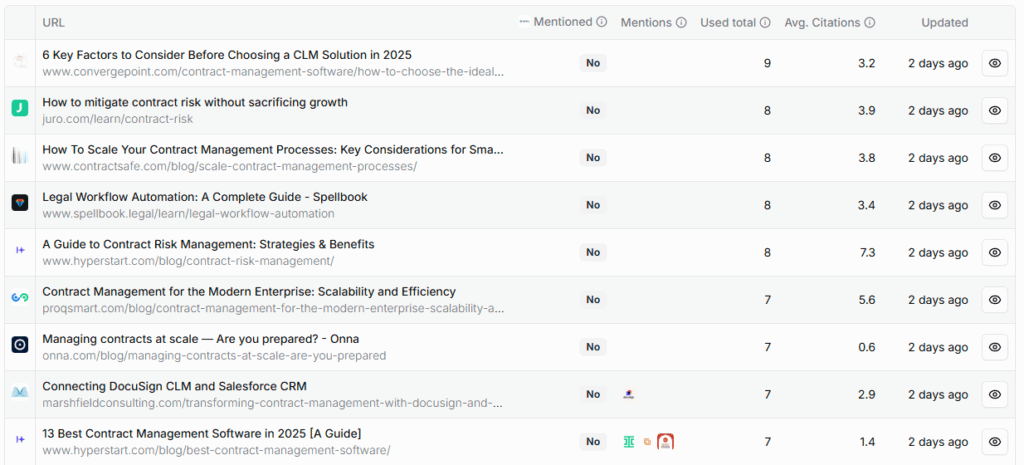
We know from our own client research at FirstMotion that often technical product documentation or marketplace integrations are picked up and used as a citation source by LLMs.

Take for example some research into the Contract Lifecycle Management software category we undertook recently.

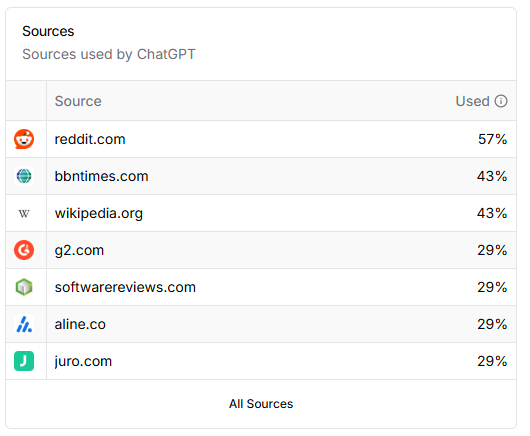
For an evaluation stage prompt: which CLM solution integrates best with Salesforce, we saw Salesforce's own AppExchange being referred to as a source by ChatGPT:

AI influence citation sources
Data from Peec AI

And for a similar prompt: CLM software that integrates well with Microsoft 365 for in house legal teams

Microsoft's own 'Learn' documentation and 'AppSource' integrations marketplace are referenced as sources by ChatGPT:

Data from Peec AI

However, if you type these same prompts as searches into Google, these sources are much less visible on page 1 of the traditional results page - if visible at all.

The Rise of Deep Pages

So traditional Google search results are still often preferring to surface blog content, whereas LLMs are relying more heavily on deeper, technical documentation.

It seems to be that large language models slice across the entire URL tree, surfacing /docs/, /api/, /help/ and even changelog fragments when those paragraphs align with the user’s question. Google AI Overviews can perform similar deep linking, bypassing the homepage entirely. Shallow 'menu level' pillar pages, and sometimes even blog posts, simply do not contain the detail models need to answer certain user queries.

Technical Documentation as an AI Search Visibility Cheat Code

Structured product docs hit the sweet spot between semantic density and crawlability. They are written for developers, packed with explicit feature labels, and sprinkled with code snippets that double as context tokens. That makes them perfect fodder for retrieval augmented generation.

When a late‑stage buyer asks about tile rendering speed or GDPR compliance the model can quote the exact paragraph that answers it – and Mapbox wins a seat at the shortlist.

llms.txt – What, Why, How

llms.txt is a technical file that serves as a guide for large language models (LLMs), helping them efficiently discover and prioritise high value content on your site. Think of it as the inverse of robots.txt: rather than telling crawlers what to avoid, it actively tells them what to focus on.

For B2B software companies, this could include API references, integration guides, pricing breakdowns, SLAs, and security documentation. These pages are often buried in subfolders or gated behind obscure navigation paths, which means LLMs may miss them during general crawling. With llms.txt you create a clear index of evergreen, citation worthy content that LLMs can parse and embed into their knowledge. The practical benefits are twofold: it could increase the likelihood of being cited in AI generated responses, and it gives you control over the narrative touchpoints LLMs use when summarising your product.

Rethinking ‘noindex’

Some teams historically cloaked product or technical docs behind noindex for fear of SEO cannibalisation or spreading Google's crawler too thin. That reflex probably now belongs to a pre‑AI era. Today, blocking crawlers may not be as helpful, when the AI models themselves have the capability to consume much more data, and more easily understand what's relevant and what's not.

Conclusion – The Existential Risk of Staying Invisible

B2B buying is converging around conversational search and AI tools are now buyer enablers in AI native buyer journeys. If a model cannot cite you, you're missing an opportunity.

Alex Price

June 25, 2025

Generative Engine Optimisation

G2.ai: the future of G2 in AI search & B2B buyer journeys

What do B2B marketers need to know about G2.ai, and the role marketplaces like G2 play in the future of AI native buyer journeys.

G2 has recently launched G2.ai, an "AI driven discovery" bolt on that sits awkwardly on top of its once dominant software marketplace. It promises faster conclusions, smarter suggestions and personalised shortlists. That all sounds lovely, until you remember one awkward fact: we can already get that - and more - from the AI assistants living in the tabs we keep open all day. G2 is trying to claim a piece of an AI search future that has already rushed past it.

The numbers do not lie: G2’s traffic is in retreat

Public traffic estimates from tools like Similarweb show G2’s monthly visits sliding. While the exact figures vary depending on the data source, the direction of travel is brutally clear: fewer people are actually using legacy reviews/comparison marketplaces to compare software.

Meanwhile Google - the gateway G2 still relies on for visibility and referral traffic - has started injecting AI Overviews directly into results. Ask a buying question like “best CRM for SMB” and you will increasingly see a generated answer that summaries multiple sources, pushes the organic listings halfway down the page and removes the need to click through. Every time that happens, G2 bleeds a little more search driven oxygen.

AI search tools have already eaten G2’s lunch (and data)

G2.ai frames itself as a revolutionary layer, but in reality it is feeding on the same corpus the wider AI world hoovered up months ago. Crawl restrictions were too little, too late. Every major model in market has already ingested millions of G2 reviews, comparison tables and category descriptions. Whether or not that wholesale scraping was ethical or legal is a fascinating legal sub plot - but it is has already happened, whether you like it or not.

The result is simple: when I ask ChatGPT, Claude or Perplexity for a software recommendation, they reply with a blended, perspective rich answer that references G2, Capterra, Gartner Magic Quadrants, Forrester Wave reports, analyst commentary and user forums. G2.ai can only echo one of those sources - itself.

Narrow data, narrow answers

G2.ai insists it provides a “trusted, expert” shortlist. Let us decode that in the context of AI search: it is a shortlist constrained by a single data silo. Even if you believe every G2 review is squeaky clean and free of vendor gaming (unlikely), the most it can offer is a statistical view of its own walled garden. The wider context - total cost of ownership analysis, integration pitfalls, regional support quality, roadmap credibility - lives outside G2’s perimeter, and therefore outside G2.ai’s reasoning.

Contrast that with your personal AI assistant of choice. It remembers the systems you have already ruled out, the tools you already use, the budget ceiling finance slammed on your last project, the tech stack your architects refuse to touch and even your colleague in IT security that doesn't want any more software tools. That context shapes the next recommendation instantly. G2.ai cannot do that because it does not know you, and because its creators are still dragging legacy review workflows into an age of conversational search.

A patch on a leaking hull

G2 is not the first incumbent to slap an AI sticker on its product in hope investors can breathe easier. The problem is deeper than branding. Marketplaces that rely on capturing search intent between keyword and vendor website are being disintermediated. AI search answers that intent directly and instantly, inside the viewport where the question was asked. Adding a chat search box on G2’s own site does nothing to reverse that macro shift.

G2.ai is, at best, an undersized plug jammed into the hole below the waterline. It might slow the flooding briefly. It will not pump the water back out, and it definitely will not stop the ocean creating new holes tomorrow.

What does it mean for B2B marketers?

G2 can still be a highly valuable source for visibility. But not for the reason that it used to be.

LLMs love training on review data from sites like G2. We know from lots of our own research that G2 often will be referenced by AI search tools like ChatGPT as an influential source for a B2B software search.

So the value of being on G2 is now that it indirectly plays into your AI search visibility strategy. A strong G2 profile may result in more likelihood of being referenced by a AI tool for a search relevant to your category. So it's still worth investing in your G2 presence - not for direct clicks and referrals, but to optimise for AI search (AEO, LLMO, AIO, GEO - whatever the process of optimising for visibility in AI search is actually called).

Final thought: An AI Band-Aid on a Sinking Ship

We are not writing G2’s obituary - yet. There is still a role for independent reviews of B2B software - but the landscape has changed massively. But for now, it seems G2 is trying to claim a piece of an AI search future that in many respects has already rushed past it.

Alex Price

June 25, 2025

Generative Engine Optimisation

Who are the leading GEO agencies for AI Search Optimisation and B2B?

Looking for a top agency to help with your GEO / AI search optimisation strategy? Here are some GEO agency specialists.

This article was updated on 18th March 2026

The world of Generative Engine Optimisation (GEO) and helping brands be more visible in AI search engines LLM results is moving fast, with a number of agencies and consultancies specialising in the space.

This list was first published in June 2025 when the GEO agency space was nascent. Nine months on, the market has moved fast. We have updated where relevant below.

What to look for in a GEO partner in 2026

The criteria for evaluating a GEO agency have sharpened considerably since mid-2025. Based on what the primary research shows drives AI citation, here is what to verify when speaking to any agency:

  • Visibility tracking across ChatGPT, Perplexity, and Google AI Mode - not just AI Overviews, which behave differently (only 13.7% citation overlap between AI Overviews and AI Mode, Ahrefs December 2025)
  • Methodology around referring domain building - SE Ranking's study of 129,000 domains confirmed this is the single strongest predictor of ChatGPT citation (December 2025)
  • Strategy for third-party platform presence — domains active on G2, Trustpilot, Capterra, and similar platforms earn 3x more ChatGPT citations per SE Ranking's research
  • Content structure approach - sections of 120 to 180 words between headings earn 70% more ChatGPT citations than fragmented content. Q&A format nearly doubles citation probability
  • How they handle content freshness - pages updated within the past three months average 6 citations versus 3.6 for untouched content

If first you're wondering: what actually is a 'GEO agency'? Then checkout our recent post first.

Here are some of the top agencies in the AI search / GEO / LLMO space - especially for B2B marketers

1. FirstMotion

FirstMotion, based in London but working globally and with a very deep B2B SaaS & software specialism. They’ve built an entire proposition around AI search and generative engine optimisation and their influence on B2B buyer journeys. They’re building the next generation of Organic Growth agency - but don’t be fooled by the fact they were founded 2025 - their founder previously built and successfully sold a B2B SEO agency after working with clients like Amazon.

Beyond the deep sector focus and innovative delivery model build, what makes FirstMotion genuinely unique as an AI SEO agency is their technology offering. Their ContextualJourney™ platform sits at the heart of their work, guiding the deep audience intelligence work needed to make an AI search strategy a success. This makes FirstMotion stand out in relation to legacy service driven SEO agencies, and their data led and unique insights into how AI search is changing B2B buyer journeys are a must read for B2B marketers.

FirstMotion AI Search Platform

2. Seer Interactive

Seer are a US headquartered digital marketing agency with a strong focus on SEO. They’ve been around for a long time ,delivering SEO for a mx of clients including some B2B brands.

We’re a fan of many of their insights, and the research they are doing into what really works when it comes to AI search.

Their founder wrote a great piece on the future of search engines recently that we recommend reading.

seerinteractive.com

3. iPullRank

Also based in the US, iPullRank are well known in the SEO and content world.

They focus on technical SEO, content engineering, and audience-focused strategies, with the goal of driving results through data-backed, strategic approaches.

The agency, founded by Mike King, has a strong reputation for delivering significant revenue growth for clients through organic search.

ipullrank.com

4. Verto Digital

Verto Digital is a B2B growth-focused digital marketing agency based in Sofi, Bulgaria, that specializes in providing value-driven marketing solutions for growth-stage companies supported by leading technology venture capital funds.

They have been developing and sharing some strong methodologies when it comes to auditing brands in LLMs and to develop a GEO strategy.

vertodigital.com

5. WebFX

WebFX are a common feature on lots of agency round ups. They have a broad proposition, but AI search is certainly now part of it.

They are a tech-enabled digital marketing agency that offers a wide range of services to help businesses grow, including SEO, web design, and PPC.

webfx.com

6. SEO Locale

SEO Locale are based near Philadelphia, US.

Their mission is to help businesses of all sizes grow with clear, results-driven digital marketing strategies.

Their website makes reference to lots of ‘AEO’ and ‘SearchGPT’ marketing services, so it’s clear they’ve been doing some thinking about how to help brands be successful when it comes to the new era of AI search and the transition from legacy SEO.

seolocale.com

7. Passionfruit

Passionfruit are positioned as SEO/GEO agency — going all in on organic growth using AI. They understand B2B software, and know that B2B SEO is different — becausee B2B buyer journeys aree different.

We like the fact they’ve built a proposition around B2B SaaS, talking to the pain points of B2B marketers.

getpassionfruit.com

8. Webspero

Webspero are an India based SEO agency that has an AI driven proposition, so if you’re looking for an outsourced or overseas SEO agency, they may be worth considering.

They describe themselves as a thriving full-stack digital marketing agency with over 80 efficient team members and have experience working with B2B brands.

webspero.com

Alex Price

June 18, 2025

Generative Engine Optimisation

Guide: Generative Engine Optimisation for B2B software & SaaS marketers in 2025

The B2B SaaS marketers guide to Generative Engine Optimisation (or AIO, LLMO, AEO). Is SEO dead, and what's the impact for B2B marketers?

AI Search, Generative Optimisation & The New Search Landscape

For years, many B2B buyer journeys have begun with a Google search. All the way back in 2015, what feels like a lifetime ago now, Google released research stating that 71% of B2B buyer journeys began with a Google search. They also shared that 89% of B2B researchers use the internet during the B2B research process. If you want an indication of just how much things have changed, Google has now deleted this research entirely and we had to use Wayback Machine to access it.

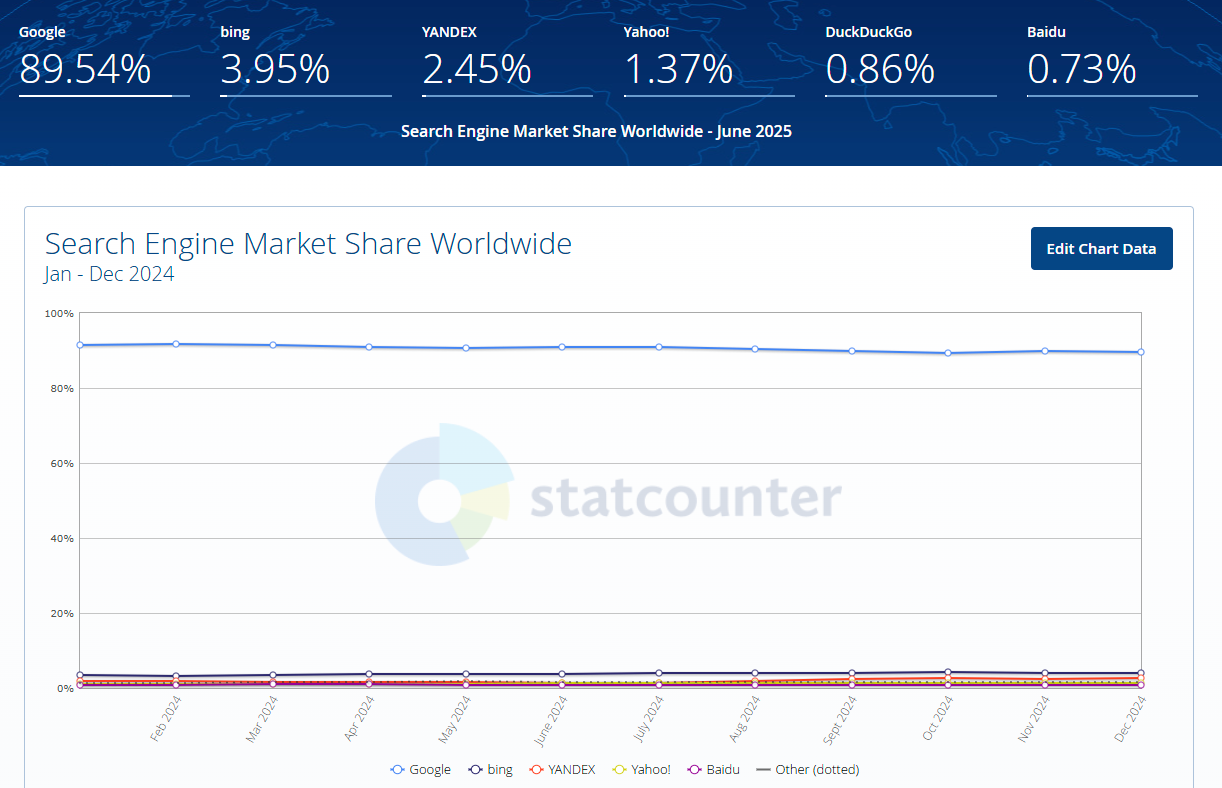
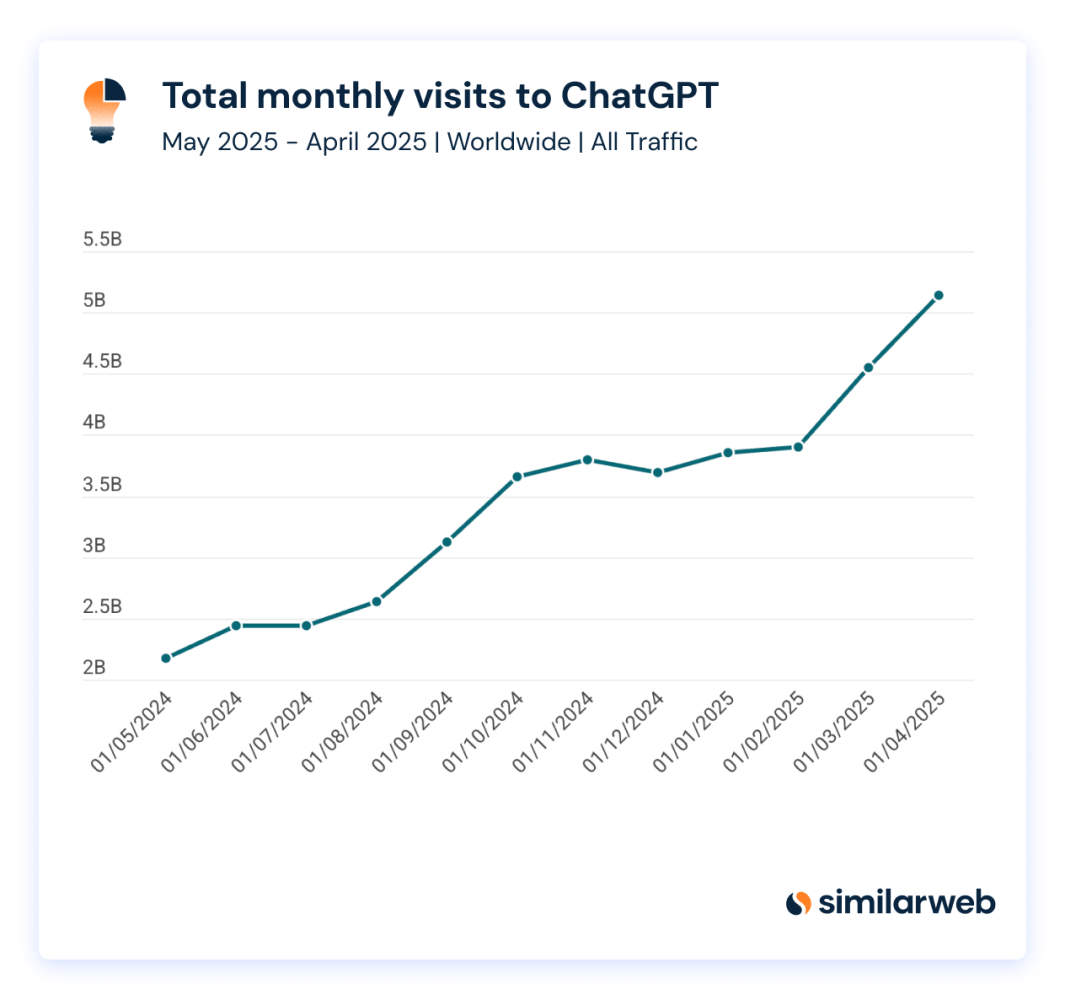
Fast forward 10 years, and it’s fair to say that we’re going through an enormous shift in terms of how B2B buyers discover solutions thanks to AI. There's lots of statistics showing the rise of AI search tools potentially undermining Google's dominance.

The days of optimising for SEO keywords and chasing rankings, clicks, and traffic are not completely behind us - but it's fair to say things are changing quickly.

AI tools like ChatGPT, Claude, Perplexity, and Google’s AI Overviews are in many respects the new web browser. They have become part of the B2B decision making unit. They sit alongside B2B buyers, acting as buyer enablement co-pilots across the entire length of the B2B buying journey - not just the initial search or discovery moment.

And so B2B marketers need to shift their mindset - unlike Google, AI assistants aren't just an acquisition channel. They are now trusted partners to B2B buyers as they discover, research, compare, procure and negotiate.

Across many clients and analytics sources, we’re seeing clicks and traffic from Google’s search results page falling, whilst referral traffic from AI tools begins to rise. In May 2025, Google announced AI Mode in the US market, giving users an option to turn off the traditional list of blue links known as the Search Results Page entirely - and instead use AI as default. It's clear that the rate of change is faster than even lots of SEO experts imagined.

You don’t have to look far to find many in the marketing and search world asking a big question: is this the end of clicks and traffic to websites

Is Buyer Search Behaviour Shifting from Google SERPs to AI Assistants?

At Google’s I/O 2025 event, they acknowledged that users are searching very differently in AI tools compared to the traditional search bar.

It appears a psychological value exchange has already been established. Users are searching much more deeply - on average providing 2-3 longer search queries in AI tools. In return, they are expecting deeper, more contextual, more personalised search results from AI tools.

A few years ago, a B2B buyer searching for a new marketing automation software might have begun their search with a Google of a term like ‘marketing automation software’:

Example Google search

But now, they are turning to tools like ChatGPT and providing much more information in their search. They know that if they provide more context, they will get better results.

Example ChatGPT prompt

AI search tools like ChatGPT, Claude, Perplexity, and Google’s AI Overviews are now acting as research co-pilots across the entire buyer journey – not just tools for initial discovery. These platforms are synthesising answers, recommending vendors, and shaping perceptions before a buyer ever lands on your website. And so it's fair to ask - are we heading for a future where websites aren't built for users - they are built for AI.

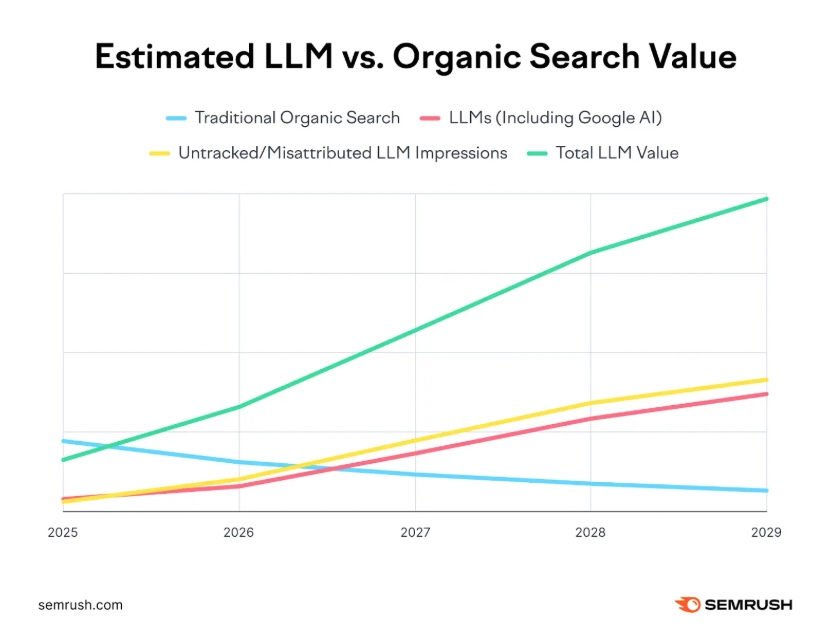
By 2028, brands’ organic search traffic will decrease by 50% or more as consumers embrace generative AI-powered search. Gartner

And so AI Search and a clear generative engine optimisation strategy has to be a priority for any B2B marketer. Clearly the traditional search results page is changing dramatically, along with buyer behaviour. And with it, B2B marketers must shift their strategy too.

What's the value of Generative Engine Optimisation (GEO)?

Optimising for AI search tools and GEO can drive success for B2B SaaS & software businesses across:

  • Authority in competitive, research led software categories
  • Speed across complex sales cycles by answering objections earlier
  • Conversion through prompt aligned content and message reinforcement
  • Revenue by generating higher quality leads from better aligned buyer journeys

Unlike traditional SEO content strategies, we focus on real business outcomes - visibility that leads to opportunity creation, not vanity metrics.

In this guide, we’ll unpack what GEO really means for B2B marketers, why it matters now, and how to approach it with a full funnel, pipeline first mindset.

We believe in a B2B marketing context, GEO is:

  • Prompt driven, not keyword driven
  • Built for LLMs, not legacy search engines
  • A process of buyer journey orchestration, not just a measure of brand visibility

It builds on some foundations of SEO and AIO, but expands into a full funnel, buyer centric model designed to convert attention into pipeline and optimise the entirety of AI-native B2B buyer journeys.

Why GEO Matters for B2B Marketers

Google itself is shaking up how it delivers results, despite being a business traditionally reliant on blue links and advertising revenue. Look how quickly AI Overviews are growing in visibility at the top of the search results page now:

Many B2B purchase journeys are long, complex, and deeply research led. They often involve:

  • Multiple decision makers
  • Large average contract values
  • Objection handling
  • Competitive comparisons

AI tools are becoming buyer enablement co-pilots - used not just for discovery, but for:

  • Comparing solutions
  • Surfacing objections
  • Exploring pricing models
  • Analysing trade offs
  • Running RFP processes
  • Negotiating terms

This creates an opportunity for B2B marketers to:

  • Reach buyers earlier in their journey
  • Actively shape category narratives
  • Build brand preference before outreach

We're also seeing that traffic and engagement from AI search can be higher converting. Why might referral traffic from AI tools like ChatGPT be more likely to convert than traffic from Google?

  • Lower competition in responses if your brand is visible
  • Higher buyer intent, carrying out deeper research
  • More specific, context aware buyers

The team at Seer Interactive shared a website that was seeing referral traffic from ChatGPT converting at 15.9% - compared to 1.76% from Google.

In short, GEO may help you meet buyers before your competitors do and convert them faster.

The Dark Funnel of AI Search

One of the biggest challenges for B2B marketers when it comes to AI search is analytics, attribution and tracking.

AI tools could well be making the so called 'dark funnel' even darker, because often AI tools might not include a link to a product they recommend.

How LLMs like ChatGPT 'Decide' What to Content to Show (B2B Software Context)

Generative engines don't really rank content in the same way search engines goo. They synthesise answers, pulling from a mix of structured and unstructured data to produce coherent, context aware outputs.

A. Third Party Signals and Data Sources

In B2B software, visibility is often influenced by brand mentions and references by sources like:

  • Review platforms like G2, Capterra, and TrustRadius
  • Analyst citations from firms like Gartner and Forrester (e.g. Magic Quadrant inclusion, Wave reports)
  • User generated content (UGC) on platforms like Reddit, Quora, Stack Overflow
  • Media coverage and backlinks from high authority publications or industry blogs

These sources signal authority and credibility, shaping what LLMs synthesise when responding to prompts like:

  • "Best procurement platforms for enterprise buyers"
  • "[Vendor A] vs [Vendor B] in 2025"

B. Your Brand’s Own Content and Website

However, your own site still plays a critical role in GEO. Generative engines can pull directly from your domain, especially when:

  • Content is well structured and answers specific, high intent prompts
  • Pages are cleanly tagged, with clear headers, lists, tables, and schema markup
  • You provide FAQs, comparisons, and product use cases that align to buyer intent
  • Your content is kept fresh, unique, and crawlable

Examples of content types that boost visibility in AI responses:

  • In depth solution pages answering niche buyer questions
  • Industry specific landing pages talking clearly to segmented ICPs or buyer personas
  • Comparison pages structured around real world decision making
  • Pricing breakdowns and total cost of ownership explainers
  • Customer success stories aligned to verticals or use cases

C. Technical Site Optimisation for GEO

Optimising your site for generative engine retrievability can have some similarities with traditional SEO, but here is an overview:

  • Structured data and schema markup to help LLMs extract and understand key facts, attributes, and comparisons
  • Clear content hierarchy and internal linking, enabling better semantic context
  • Use of tables, bullets, FAQs, and TL;DR summaries that are easily summarised or lifted into responses - content chunking
  • Sitemap and crawl accessibility, including proper robots.txt configuration
  • Deployment of a llms.txt file to signal AI access permissions (e.g. whether your content can be used for retrieval or training)
  • Ensuring AI crawlers can reach your site and aren't blocked by tools like Cloudflare

GEO vs SEO: What’s the Difference for B2B marketers?

SEOGEO
Keyword drivenPrompt driven
Google rankingsSynthesised answers
Traffic & CTRBuyer visibility & retrievability
TOFU focusedFull journey orchestration
On page SEO & backlinksEcosystem visibility & source alignment

What is a B2B specific GEO / AI Search strategy? Aligning Prompts to the B2B Buyer Journey

GEO isn’t just about ranking for "best software" prompts. It’s about shaping how your brand shows up across the entire B2B journey, and that begins with deeply understanding your audience, their needs and pain points:

Example Top of Funnel B2B buyer prompts:

  • "Best [category] platforms for [industry]"
  • "Best ways to automate [process] workflows"
  • “How do companies manage [challenge] effectively?”
  • “Alternatives to using spreadsheets for [process]”
  • “What software could help us improve [challenge]?”

Example Middle of Funnel B2B buyer prompts:

  • “[Vendor A] vs [Vendor B] vs [Vendor C] – which is best for a [type] business with [specific challenge]?”
  • “Best [specific software] for insurance companies”
  • “What key features should we look for in a [category] platform?”

Example Bottom of Funnel B2B buyer prompts:

  • “What are pricing tiers and contract terms for [Vendor A]”
  • “Does [Vendor A] integrate with [existing tool]?”
  • “What are red flags to watch out for when buying [solution]?”
  • "What contract terms should I look to negotiate for a [solution]?"

Each prompt is a chance to:

  • Build trust
  • Guide decisions
  • Pre handle objections
  • Accelerate pipeline velocity

And that's why we believe GEO is not just a visibility strategy - it’s a way of optimising the full length of the buyer journey in the new era of AI native buyer journeys.

Introducing the ContextualJourney™ Platform

At FirstMotion, we go beyond basic GEO. Our proprietary technology platform, ContextualJourney™, is designed for B2B software companies selling in complex, considered, competitive and often high value B2B sales journeys.

It includes:

  1. Audience Intelligence: we believe deep buyer understanding has to sit at the heart of a successful GEO strategy
  2. Prompt Mining: using lots of data enrichment, AI and billions of B2B buyer data points, we can mine prompts that B2B buyers might actually be using
  3. Content Mapping: Aligning prompts to buyer journey stages, and design narrative architecture
  4. And a number of other features: we're building lots of exciting functionality into our platform, redefining what the B2B SaaS AI SEO agency of the future looks like

We also use a number of other third party best in class analytics platforms for measuring brand visibility within AI tools.

Common Misconceptions About GEO & AI Search

As Generative Engine Optimisation becomes a more recognised term, it's important to address some of the common misunderstandings that can lead B2B marketers astray.

"It's just SEO for AI" - This is perhaps the most common misconception. While GEO borrows some ideas from SEO and there is certainly some overlap in terms of tactics, it requires a shift in both mindset and strategy. Generative engines are not search engines. They don’t display a list of links or necessarily operate on classic ranking signals. Instead, they synthesise answers and present a single authoritative response. GEO is about orchestrating visibility throughout the buyer journey - not just at the top of it.

"We just need more AI content" - Flooding your site with generic, AI generated content won’t make you visible inside LLMs. What matters is content that aligns with buyer intent and the prompts they’re using. GEO requires structured, high quality, contextual content that is both retrievable and referenced by trusted sources, based on deep audience intelligence.

"It's too early" - Buyers are already using AI tools to explore options, compare vendors, and evaluate pricing - often in ways that never touch your website. If you're not thinking about how to be visible in those journeys now, you're already behind.

If you’re a B2B marketing leader looking to drive real outcomes in the new era of AI native B2B buyer journeys, we think it's time to start thinking about a generative engine optimisation strategy.

Check out our GEO terms glossary if you're still trying to get your head around the space.

Alex Price

June 12, 2025

Generative Engine Optimisation

What types of AI prompts should B2B software companies optimise for?

How should B2B software companies think about mapping AI prompts/searches onto their buyer journeys to optimise for LLM visibility?

Generative AI tools like ChatGPT, Claude, and Perplexity are fundamentally reshaping how B2B buyers research and evaluate B2B software vendors. Traditional keyword based search is no longer the only gateway to discovery. Increasingly, buyers are turning to AI assistants for answers to their most pressing questions - not just for initial top of funnel research, but across the entire modern AI assisted buyer journey.

So prompt visibility is becoming as important as search visibility has been for a long time. For B2B software companies, it’s not just about ranking on Google anymore. It’s about being the answer when a buyer types a high intent question into an LLM.

But what kinds of prompts should you actually be aiming to appear in? How do you know which ones matter across the buyer journey? And what can you do to make sure your brand is part of those conversations?

Why prompt visibility matters for B2B software marketers

Enterprise software buying journeys can be long, complex, and often involve multiple stakeholders across technical, commercial, and executive functions. These buyers aren’t typing “CRM software” into Google and clicking the first few links anymore. They’re asking AI tools nuanced questions like:

  • “What’s the best CRM for a fast-growing B2B sales team?”
  • “How does HubSpot compare to Salesforce for integrations?”
  • “What are the hidden costs of switching marketing automation tools?”

They might also include details of their company size, team size and other company information - B2B buyers know that the more information they provide in a search, the more contextual, personalised results they are likely to get back.

These prompts are replacing many of the early and mid stage searches that marketers used to target with blog content and SEO optimised landing pages. And because LLMs often return a smaller number of high confidence results compared to the traditional search results page, the cost of not appearing in those answers is growing.

Prompt visibility influences brand awareness, authority, and even conversion outcomes. It can shape a buyer’s shortlist before they ever visit your website.

The role of audience intelligence

To build an effective prompt strategy, you can’t just guess what buyers might be asking. You need a deep, structured understanding of your ideal customers: who they are, what they care about, and how they think and speak. What their pain points are

This is where audience intelligence becomes critical.

Different roles ask different questions. A CTO evaluating a data platform might focus on architecture and compliance. A RevOps lead might be interested in integrations, reporting, and ease of deployment. A procurement manager could be looking for value, contract flexibility, and proof of ROI.

That means your prompt strategy must be segmented and persona aware. The more granular your understanding of your ICPs (Ideal Customer Profiles), personas, pain points and use cases, the more accurately you can anticipate the prompts they’re putting into tools like ChatGPT.

At FirstMotion, we use our own audience intelligence technology platform, ContextualJourney™ to help us guide this work. With millions of B2B buyer data points, intent data, enrichment and AI integrations, it enables us to 'prompt mine' highly effectively as a generative engine optimisation agency.

Deep audience intelligence is the foundation for any generative optimisation or AI search visibility strategy.

Mapping prompts to the B2B buying journey

One of the most effective ways to plan your prompt targeting is to structure it around the B2B buying journey. This helps you ensure you're visible not just when someone is learning, but when they're evaluating, comparing and deciding.

At FirstMotion, we use a process that translates traditional SEO keyword research into prompt archetypes tailored to each stage of the funnel. Here's a simplified view:

Top of Funnel (Awareness & Exploration)

These prompts reflect early stage curiosity or problem awareness.

  • “What are the best tools for managing spend in a SaaS business?”
  • “Alternatives to [Vendor] for procurement software”
  • “How can marketing teams measure content ROI?”

Middle of Funnel (Consideration & Evaluation)

Here, buyers are starting to compare vendors and shortlist options.

  • “[Product] vs [competitor] comparison”
  • “Best [category] platforms for [sector] companies”
  • “Must have features in [category] software”

Bottom of Funnel (Decision Support & Objection Handling)

These prompts signal serious buying intent and final-stage decision support.

  • “Customer reviews of [product] for global teams”
  • “Common problems during [vendor] implementation”
  • “Is [tool] worth it for companies under 500 employees in [sector]?”

Each of these prompt types maps to a specific kind of buyer intent. There are more opportunities than ever to be present and to have some kind of influence.

Measuring prompt performance

Tracking prompt visibility is still in its early days, but it's evolving fast. We use a range of tools and data sources to help marketers measure which prompts they're showing up in, how frequently they're being mentioned across different LLMs, and how competitors are performing.

We recommend building a Prompt Map - a working database of high value prompts segmented by buyer stage and persona. Then, track where and how your brand appears, and use this insight to shape content creation, improve prompt conditioning, and even influence how your brand is described on third party sources. Peec AI is our preferred analytics and visibility platform.

Scoring prompt visibility is also a valuable way to demonstrate progress and ROI in an AI first go-to-market motion.

Prompt visibility isn’t just a technical challenge - it’s a strategic opportunity.

For B2B software companies, appearing in the right prompts means being present at the precise moments buyers are shaping their understanding of a category, evaluating vendors, or trying to make a final decision.

If you want to win in this new landscape, start with audience intelligence. Understand who your buyers are, what they ask, and how they think. Then, work systematically to translate those insights into a prompt strategy that ensures your brand is part of the conversation.

Alex Price

June 12, 2025

 (edited)